Builder Use Cases and Solution Combinations
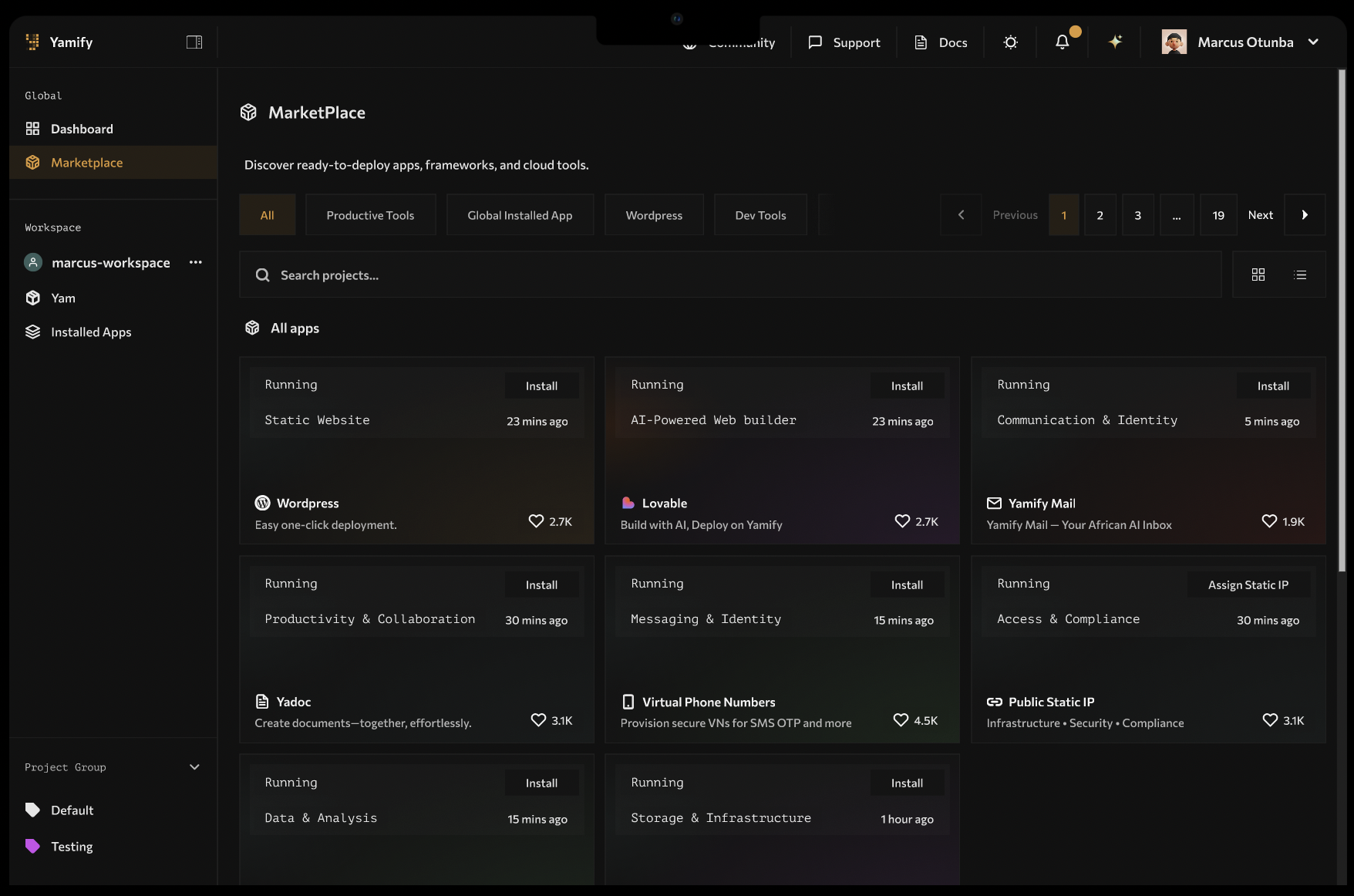
Solution combinations start by installing the right app stack from the Yamify Marketplace.
Yamify becomes more valuable when you treat its apps and interfaces like building blocks.
You are not limited to “install one app.” You can combine:
- Marketplace apps such as n8n, OpenClaw, Supabase, Mattermost, and WordPress
- Yamify MCP for AI-driven control
- Yamify Inference API for model-backed product features
- Telegram for fast operational access
High-impact combinations
Claude + Yamify MCP + OpenClaw
What it does
- Claude inspects workspaces and apps through MCP
- OpenClaw becomes the running agent workspace
Best for
- AI agencies
- internal ops copilots
- multi-client agent deployments
Cursor + MCP + Inference API
What it does
- Cursor provisions a model endpoint
- your app code immediately integrates with it
Best for
- startup teams shipping fast
- solo builders turning prototypes into products
Lovable + Inference API + Supabase
What it does
- Lovable builds the frontend
- Yamify hosts the model endpoint
- Supabase stores user and product data
Best for
- lightweight SaaS products
- AI dashboards
- internal tools
OpenClaw + n8n + Supabase
What it does
- OpenClaw handles agent behavior
- n8n runs workflow automation
- Supabase stores durable app data
Best for
- lead qualification
- support operations
- AI-enabled service businesses
Telegram + n8n + OpenClaw
What it does
- Telegram becomes the operating surface
- n8n automates handoffs
- OpenClaw handles reasoning and response logic
Best for
- mobile-first operators
- field teams
- WhatsApp/Telegram-first markets
What Lovable, Claude, and Cursor users can do on Yamify
Lovable users
- build the UI in Lovable
- use Yamify-hosted inference as the backend AI layer
- connect to Supabase or n8n for workflow and data
Claude users
- query Yamify workspaces and live apps through MCP
- plan deployments
- provision inference endpoints
- generate implementation code around those endpoints
Cursor users
- provision Yamify resources from inside the repo workflow
- wire endpoints into the product without leaving the editor
- automate integration and smoke-test setup
Example solutions you can ship
1. LeadForge AI
Stack
- OpenClaw
- n8n
- Supabase
- optional Telegram lookup
Outcome
- qualify inbound leads
- store lead state
- trigger follow-ups automatically
2. AI Support Console
Stack
- Inference API
- n8n
- Supabase
- Lovable frontend
Outcome
- summarize tickets
- classify urgency
- route work to the right team
3. Agency Client Workspace Hub
Stack
- MCP
- OpenClaw
- Mattermost
- team invites
Outcome
- one workspace per client
- one shared operating layer for internal delivery teams
4. Chat-First Ops Dashboard
Stack
- Telegram bot
- n8n
- OpenClaw
Outcome
- retrieve app URLs
- check deployment inventory
- reduce time spent hunting through the UI
Choosing the right surface
Use:
- MCP when an AI tool needs structured control
- Inference API when your product needs live model calls
- Telegram when humans need quick mobile operations
- Marketplace apps when you need a full managed runtime
Strong GTM story
These combinations are strong because they compress time-to-value:
- less DevOps overhead
- faster demos
- easier client delivery
- more reusable service templates
That is the kind of narrative that works well for freelancers, agencies, and early SaaS teams.